a consultationfirst,always
Sali is a registered nurse who has spent her career in chronic disease management before cosmetics, which is a longer way of saying she is comfortable telling you no. Every appointment at Sal starts with a proper look at your face and a plain conversation about what is worth doing, what is not, and what it will actually involve.
Cosmetic procedures are medical procedures with real risks and real recovery. Nothing on this page is a recommendation, and nothing is decided until you have sat down with a practitioner.
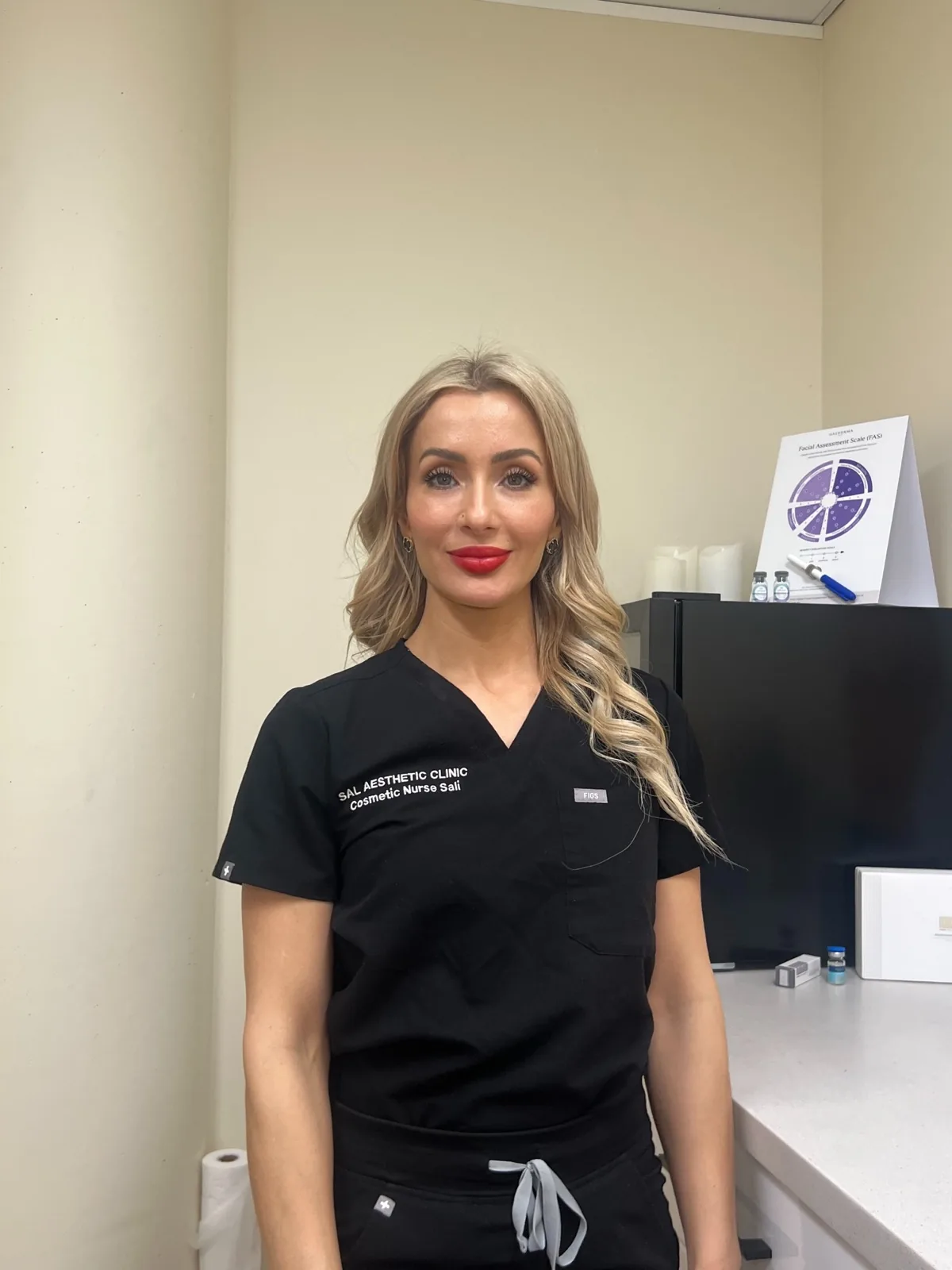
Sali
Registered Nurse
Director & Head Cosmetic Nurse
what people
come in about
These are the concerns people book about, not a menu of products. What happens next is a clinical decision, made with you, in the room.
how an
appointment
actually goes
You talk, she listens
You get to explain what has been bothering you in your own words, without being handed a menu. Most people arrive pointing at one thing and find out it was something else.
A proper assessment
Your medical history, what you are taking, any previous cosmetic work, and a look at how your face moves rather than how it sits still in a mirror.
What she actually thinks
Sometimes that is a plan. Sometimes it is skincare and a review in six months. Sometimes it is a referral somewhere else, or nothing at all. All three are real answers.
The full picture, before you decide
Risks, recovery, cost, how long anything lasts and how often it would need repeating. You are never asked to decide on the day.
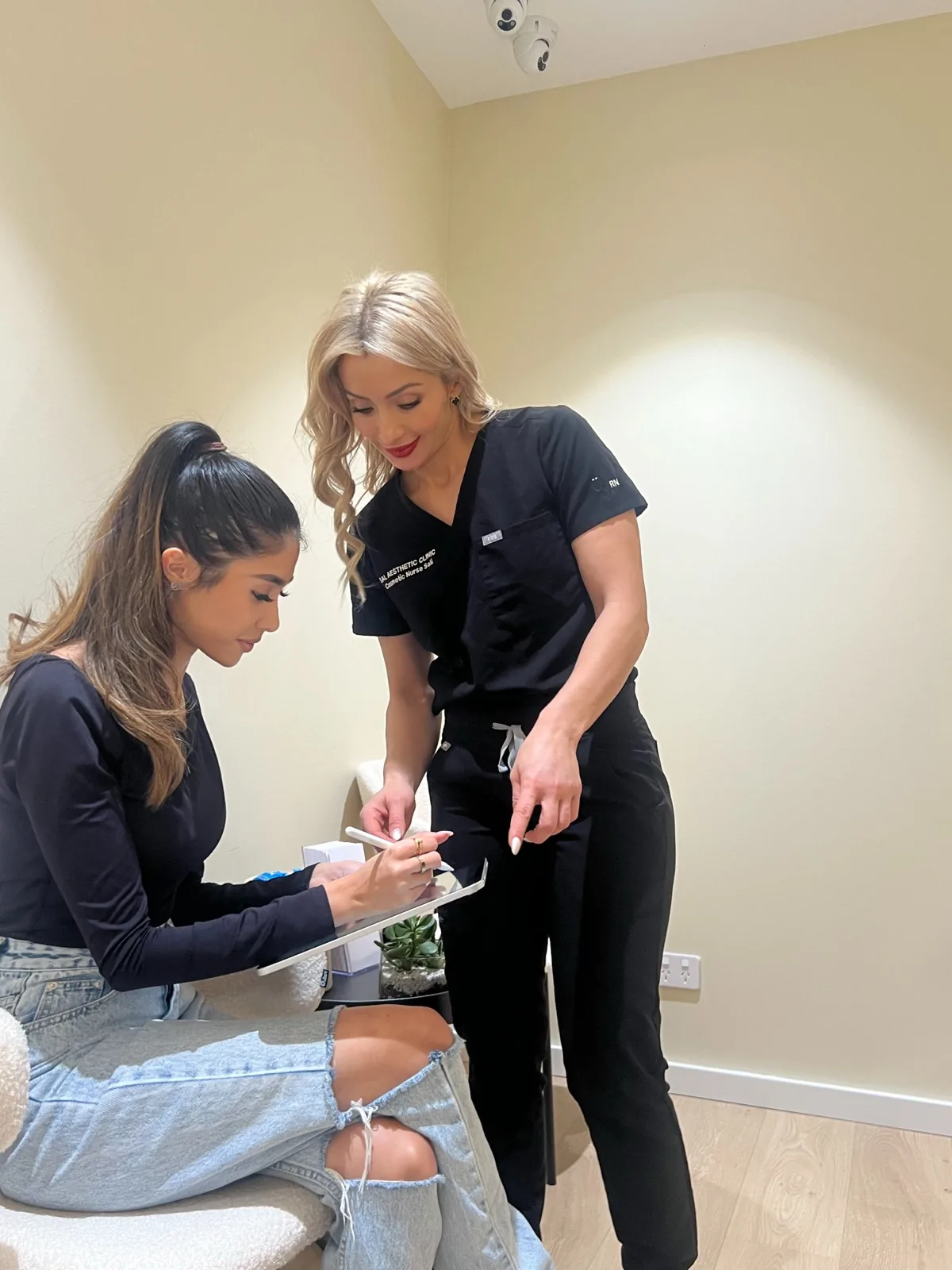
a nurse before
a cosmetic nurse
Sali came into aesthetics from the other end of nursing. Public and private hospitals, chronic disease management, the sort of work where you learn to read a medical history properly and where getting it wrong matters.
That background is the reason consultations here run long and the reason people sometimes leave without booking anything. Knowing when not to treat someone is a clinical skill, and it is one that gets quietly ignored in this industry.
the part most
clinics skip
Every procedure offered here carries risk. Bruising and swelling are common. Less common but real complications include infection, asymmetry, lumps, nerve irritation, vascular problems and results that do not last as long as you hoped.
Recovery is not nothing either. Depending on what you have done, you may need to keep upright for hours, avoid exercise for days, sleep differently, or plan around bruising that shows for a week or more.
You should know all of this before you book, not after. That is why it has its own page rather than a line of small print at the bottom of one.
Read risks and recoverythree rooms,
one nurse
Bankstown, Campsie and Campbelltown. Whichever rooms you book, Sali is the one who sees you, from the first consultation through every review afterwards.
questions
worth asking
Do I have to have a treatment on the day of my consultation?
No. A consultation is a conversation and an assessment. Plenty of people leave without booking anything, and some leave having decided not to go ahead at all. You are never asked to decide on the spot.
Why does the website not list treatments or prices?
Australian law prohibits advertising prescription-only medicines to the public, and a great deal of what happens in a cosmetic clinic involves one. The rules cover brand names, ingredient names, nicknames and generic stand-ins, along with pricing. Those conversations happen privately during a consultation with your practitioner.
Are there before and after photos?
No. Results differ from person to person and photographs of somebody else set an expectation that may have nothing to do with your face. What one person's outcome looked like is discussed with you in the room, in context.
Who will I see?
Sali, a registered nurse and the director of the clinic. She performs every consultation and every treatment across all three locations.
Which location should I book?
Whichever is easiest to get to. The rooms in Bankstown, Campsie and Campbelltown all run the same consultations with the same practitioner.
How long does a first consultation take?
Longer than most clinics. Allow around 45 minutes for a first appointment so there is time for a proper history, an assessment, and a full discussion of risks and recovery before anything is decided.
book the conversation,
not the treatment
A consultation commits you to nothing. You can walk out having decided to do nothing at all, and plenty of people do.